Source C Mount Industrial Camera Lens for Inspection, Machine Vision, and Surveillance
Source 30 c mount industrial camera lens options with focal lengths from 8mm to 50mm and apertures ranging from F1.4 to F2.0. Buyers can compare specifications like distortion rates, mounting standards, and compatible sensor sizes for industrial applications.
Key considerations
Products List


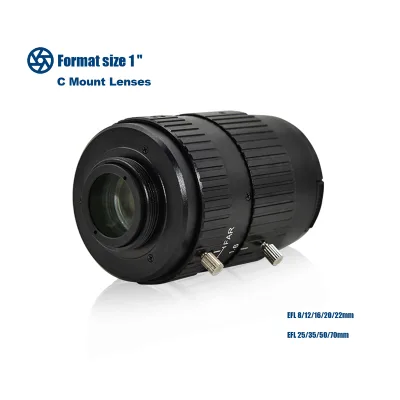
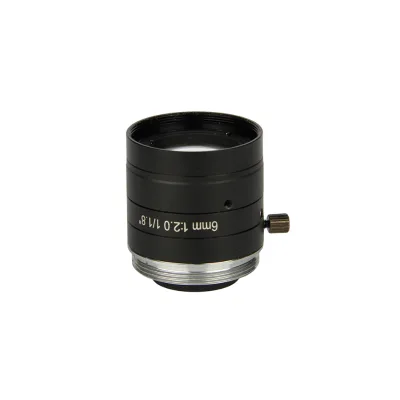
Comprehensive Sourcing Guide
Strategic Sourcing Guide for C-Mount Industrial Camera Lenses
Procuring optical components for industrial automation requires a rigorous approach that balances technical precision with supply chain reliability. The C-mount industrial camera lens market offers a diverse array of options, yet the complexity of specifications often leads to procurement errors if not carefully managed. This guide synthesizes available product data and industry standards to provide a structured framework for buyers evaluating fixed-focus lenses for machine vision applications. The focus remains on verifying factual attributes, understanding cost drivers, and establishing quality control protocols without relying on unverified marketing claims.
Technical Specifications and Optical Performance
The foundation of any successful procurement begins with a precise definition of optical requirements. In the current market, fixed-focus lenses dominate the industrial sector due to their reliability and cost-effectiveness. Buyers must distinguish between various focal lengths and aperture settings, as these parameters directly dictate the field of view and light-gathering capability of the system.
Data indicates a specific range of focal lengths available for C-mount configurations, including 8mm, 12mm, 16mm, 25mm, and 50mm options. Each focal length serves a distinct application profile. For instance, an 8mm lens provides a wide field of view suitable for close-range inspection, while a 50mm lens offers a narrow field of view for long-distance monitoring. The maximum aperture is equally critical; observed specifications include F2.0 and F1.4 settings. A lower F-number, such as F1.4, allows for greater light intake, which is essential in low-light environments, whereas F2.0 offers a balance between light sensitivity and depth of field.
Distortion is another paramount specification that must be verified. High-performance industrial lenses typically exhibit very low distortion rates. Observed data points to TV distortion levels as low as <0.05% and <0.1%, with some models maintaining distortion under <0.3%. For applications requiring precise measurement, such as dimensional inspection, the <0.05% threshold is often the minimum acceptable standard. Buyers should also verify the filter size, which can range from 46mm in certain models, ensuring compatibility with any protective glass or optical filters required for the specific environment.
The following table summarizes the observed focal length and distortion specifications for reference:
| Focal Length | Maximum Aperture | Observed TV Distortion | Typical Model Identifier |
|---|---|---|---|
| 8mm | F2.0 | <0.3% | FA0801C |
| 12mm | F2.0 | <0.3% | FA1201C |
| 16mm | F1.4 | <0.1% | FA1601C |
| 25mm | F2.0 | <0.1% | FA2501C |
| 50mm | F1.4 | <0.05% | FA5001C |
Sensor Compatibility and Mount Standards
Matching the lens to the camera sensor is a frequent point of failure in procurement. The C-mount standard is the industry norm, defined by a flange focal distance of 17.526 mm and a thread diameter of 25.4 mm. However, the physical dimensions of the lens barrel and the specific thread pitch must align with the camera housing. Observed product standards indicate dimensions such as φ26.8×19.9 mm, φ30.6×44.9 mm, and φ27×23.5 mm. These variations suggest that while the mount interface is standard, the housing size varies by manufacturer and focal length.
Sensor compatibility is equally strict. Industrial lenses are often designed for specific sensor formats. Data shows lenses compatible with 1/1.8" sensors (2MP/3MP/5MP) and 2/3" sensors (2MP/3MP/5MP). The 2/3" format is a common standard for high-resolution industrial cameras, covering a larger area than smaller sensors. Buyers must ensure the lens image circle fully covers the sensor diagonal to avoid vignetting. For example, a lens rated for a 2/3" sensor may not perform optimally on a 1/1.8" sensor if the optical design is not optimized for the smaller format, potentially leading to uneven illumination.
Furthermore, the imager sensor wavelength range is a critical technical parameter. Some lenses are specified for a wavelength range of 4201000nm, which covers the visible spectrum and extends into the near-infrared. This is vital for applications involving night vision or specific material inspections that rely on near-IR reflectivity. If the application requires UV or deep IR capabilities, the standard 4201000nm range may be insufficient, necessitating a specialized optical coating or glass type.
Cost Drivers and Pricing Variables
Understanding the cost structure of industrial lenses is essential for budgeting and supplier negotiation. The observed price range in the market spans from $2.65 to $16,500 USD. This vast disparity is not arbitrary but reflects differences in optical quality, build materials, and manufacturing complexity. The lower end of the spectrum typically corresponds to basic fixed-focus lenses with standard glass elements and minimal coatings. In contrast, the higher price points are associated with lenses featuring advanced optical designs, low-distortion glass, and specialized coatings for specific wavelength ranges.
Several factors drive these costs. First, the focal length and aperture combination influence the complexity of the lens design. A 50mm F1.4 lens requires more precise grinding and polishing than an 8mm F2.0 lens, resulting in higher manufacturing costs. Second, the tolerance for distortion directly impacts the price. Lenses achieving <0.05% distortion require tighter manufacturing tolerances and higher-grade glass, which increases the unit cost significantly compared to lenses with <0.3% distortion.
Minimum Order Quantity (MOQ) is another variable affecting the total cost of ownership. Observed MOQs range from 1 to 10 units. While a low MOQ of 1 allows for prototyping and small-batch testing, it often comes with a higher per-unit price. Conversely, ordering at the higher end of the MOQ range may trigger volume discounts, though this depends on the specific supplier's pricing policy. Buyers should also consider the packaging and shipping terms, such as FOB Shenzhen, which can impact the final landed cost depending on the buyer's location and logistics capabilities.
Supplier Evaluation and Verification Protocols
When evaluating potential suppliers, buyers must move beyond marketing materials and focus on verifiable data points. The supply chain for industrial optics often involves manufacturers located in specific hubs, with Shenzhen and China cited as key production origins. While these locations indicate a mature manufacturing ecosystem, buyers must verify the specific factory capabilities.
A critical step in supplier evaluation is the request for detailed technical documentation. Buyers should ask for test reports that confirm the focal length, aperture, and distortion specifications. For instance, if a supplier claims a lens has <0.05% distortion, they must provide a test report from a calibrated optical bench verifying this metric. Relying on verbal assurances or unverified product descriptions is risky in industrial procurement.
Additionally, the customization capabilities of the supplier should be assessed. Many industrial applications require non-standard modifications, such as specific thread pitches or custom housing dimensions. The availability of customization is a key differentiator among suppliers. Buyers should inquire about the lead times for custom orders versus standard stock items. While standard items may have short lead times, custom modifications can extend the delivery schedule significantly.
It is also important to verify the production standards. The observed product standards, such as φ26.8×19.9 mm, serve as a baseline for physical compatibility. However, buyers should confirm that the supplier adheres to consistent quality control processes to ensure that every unit meets these dimensional tolerances. Inconsistent manufacturing can lead to fitment issues on the production line, causing downtime and additional costs.
Quality Control and Compliance Considerations
Quality control in the optical industry extends beyond simple visual inspection. Buyers must establish a robust QC protocol that includes optical testing, mechanical verification, and environmental durability checks. The absence of certain features, such as image stabilization, external flash, or WiFi, is standard for industrial lenses and should not be a cause for concern. However, the presence of these features in a "fixed focus" lens would be a red flag indicating a mismatch in product definition.
Compliance checks should focus on the materials used in the lens construction. While specific certifications are not always listed in general product data, buyers should request material safety data sheets (MSDS) to ensure the lens materials are safe for the intended environment. For example, if the lens will be used in a food processing or pharmaceutical setting, the materials must be non-toxic and easy to clean.
The focus range is another critical quality parameter. Observed data indicates a focus range of 0.1m to infinity for certain models. This range must be verified for the specific application. If the inspection task requires focusing on objects closer than 0.1m, the lens will be unsuitable. Buyers should also verify the control mode; manual focus is standard for fixed-focus lenses, but the mechanism must be robust enough to withstand the vibrations and temperature fluctuations of an industrial environment.
Long-Term Procurement and Maintenance Strategies
Sourcing industrial lenses is not a one-time transaction but part of a long-term operational strategy. Buyers should consider the lifecycle of the lens and the availability of spare parts. Given the precision nature of optical components, lenses can degrade over time due to dust, moisture, or physical impact. Establishing a relationship with a supplier that offers replacement parts or repair services is advisable.
The compatibility of the lens with future camera upgrades is another consideration. As sensor technology evolves, the demand for higher resolution and different sensor sizes may arise. Buyers should select lenses that offer some flexibility in terms of sensor compatibility. For example, a lens designed for a 2/3" sensor may also work with a 1" sensor if the optical design allows, providing a degree of future-proofing.
Finally, buyers should plan for the potential need for customization. As applications become more specialized, the demand for lenses with specific focal lengths or apertures may increase. Suppliers with strong customization capabilities can adapt to these changing needs without requiring a complete overhaul of the vision system. This flexibility can save significant time and money in the long run, ensuring that the procurement strategy remains agile and responsive to operational requirements.
In conclusion, successful procurement of C-mount industrial camera lenses requires a deep understanding of technical specifications, a rigorous approach to supplier evaluation, and a strategic view of long-term operational needs. By focusing on verified data, such as focal length, distortion, and sensor compatibility, buyers can mitigate risks and ensure the reliability of their industrial vision systems. The vast price range and diverse specifications available in the market offer opportunities for optimization, provided that the procurement process is disciplined and evidence-based.
FAQs
What focal lengths are available for C-mount industrial camera lenses?
Available focal lengths include 8mm, 12mm, 16mm, 25mm, and 50mm options. These fixed-focus lenses serve distinct application profiles ranging from wide-field close-range inspection to narrow-field long-distance monitoring.
Which maximum aperture settings are observed in these industrial lenses?
Observed maximum aperture settings are F2.0 and F1.4. A lower F-number like F1.4 allows greater light intake for low-light environments, while F2.0 balances light sensitivity with depth of field.
How does TV distortion vary across different C-mount lens models?
TV distortion levels range from less than 0.05% to less than 0.3% depending on the model. High-performance lenses for precise measurement often meet the stricter <0.05% threshold, while others maintain distortion under <0.3%.
What sensor formats are compatible with these C-mount industrial lenses?
These lenses are compatible with 1/1.8 inch and 2/3 inch sensor formats supporting 2MP to 5MP cameras. Buyers must ensure the lens image circle fully covers the sensor diagonal to avoid vignetting issues.
Can these lenses be customized for specific industrial requirements?
Customization is available for specific industrial requirements. Buyers should inquire about lead times for custom orders versus standard stock items to ensure the supplier can adapt to changing operational needs.
What is the typical price range for C-mount industrial camera lenses?
The observed price range spans from 2.65 to 16500 USD. Costs vary based on optical quality, build materials, and manufacturing complexity, with lower prices for basic lenses and higher prices for advanced designs.
What is the minimum order quantity for purchasing these lenses?
The minimum order quantity ranges from 1 to 10 units. A low MOQ allows for prototyping, while ordering at the higher end may trigger volume discounts depending on the specific supplier policy.
Where are these C-mount lenses typically manufactured?
These lenses are typically manufactured in Shenzhen, China. Buyers should verify specific factory capabilities and production standards to ensure consistent quality control and dimensional tolerances for their applications.